reprojection_error 衡量预测视频在被包装的 DROID-SLAM [Teed and Deng, 2021 ] 重建路径下,三维几何与跨帧投影是否自洽 。它只依赖 prediction 本身,不需要 reference video 或相机真值;核心问题是:由生成视频恢复出的相机位姿和稠密深度,能否把场景点重新投影到其他帧的观测位置附近。
与 COLMAP [Schönberger and Frahm, 2016 , Schönberger et al., 2016 ] 等稀疏重建方法主要依赖少量高质量特征点不同,DROID-SLAM 采用稠密 SLAM 路径:通过可微分的 Dense Bundle Adjustment(DBA)层,在优化过程中联合细化相机位姿与逐像素深度,使其与光流对应关系保持一致。生成视频的几何错误往往不只出现在少数匹配点附近,也可能表现为背景扭曲、物体局部漂移、深度层次不稳定或跨帧结构无法闭合;稠密 DBA 会利用尽可能多的有效像素和共视点,因此更贴近“整段 rollout 能否被同一个三维解释”的评测目标。
DBA 细化完成后,对有效共视点集合 V \mathcal{V} V
e r e p r o j = 1 ∣ V ∣ ∑ ( i , j ) ∈ V ∥ p i j ∗ − Π ( P i j ) ∥ 2 (1) e_{\mathrm{reproj}}
=
\frac{1}{|\mathcal{V}|}
\sum_{(i,j)\in\mathcal{V}}
\left\lVert
p^{*}_{ij}
-
\Pi(P_{ij})
\right\rVert_2
\tag{1} e reproj = ∣ V ∣ 1 ( i , j ) ∈ V ∑ p ij ∗ − Π ( P ij ) 2 ( 1 ) 其中 p i j ∗ p^{*}_{ij} p ij ∗ i i i P i j P_{ij} P ij Π ( ⋅ ) \Pi(\cdot) Π ( ⋅ )
在 WorldAtlas 中,runtime 将整段 prediction 解码为帧序列,并以固定时间步长 4 均匀抽帧运行 DROID-SLAM,以统一约束长视频的显存占用;抽样覆盖整段视频而非只取片段。系统估计轨迹与内部几何,并取有效观测重投影误差的均值作为原始分数,即式 (1) 中的 e r e p r o j e_{\mathrm{reproj}} e reproj [ 0 , 1.0719 ] [0, 1.0719] [ 0 , 1.0719 ] [ 0 , 1 ] [0, 1] [ 0 , 1 ] 归一化分数越高越好 )。若 SLAM 重建失败或未产生有效分数,则返回 raw = null、normalized = null。DROID-SLAM 计算成功时,该指标在所有 formal suite 中为 official ,并写入 consistency_3d_4d 聚合;它是有用的几何一致性信号,但不能替代 camera error 等几何真值监督,且受固定内参 SLAM 假设影响,跨异构数据解读时应保持谨慎。
Audit manifest: docs/assets/metric_examples/curated_same_case_manifest.json.
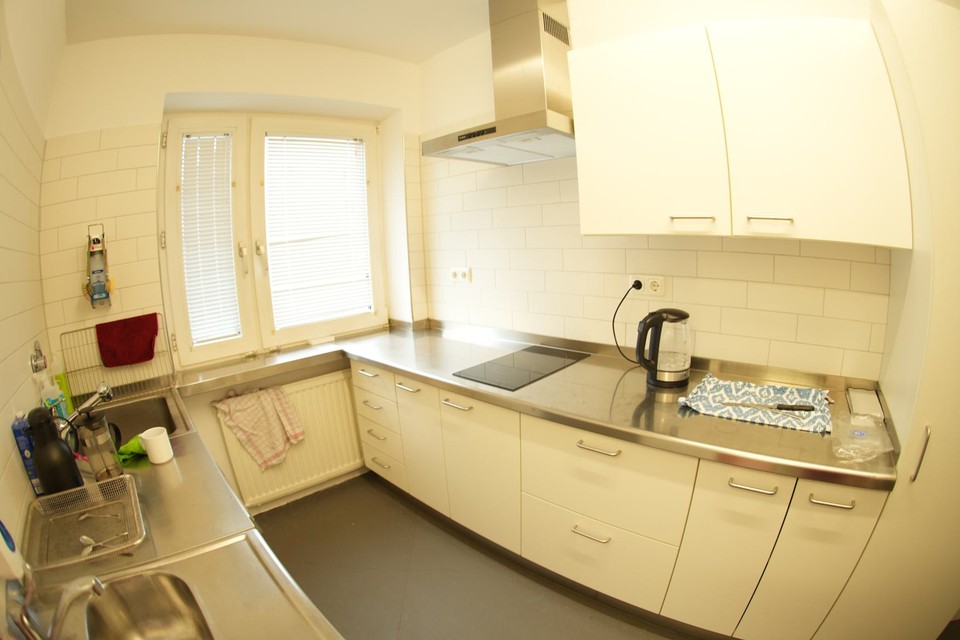
输入图像
输入已核验 · 同一 benchmark case · gap 0.9325
image_static_photorealistic_public_spaces_0149套件: image_static 场景: photorealistic / indoor / public_spaces
基准 prompt target
Camera push in. Public spaces with dining table, chairs, and stainless steel countertop.
prompt source: prompt_target
两条视频的首帧都已通过与展示输入的几何匹配核验;高低标签只比较当前 metric。
较高指标分 分数 0.9504 平均重投影误差 0.053 px
较低指标分 分数 0.0179 平均重投影误差 1.053 px
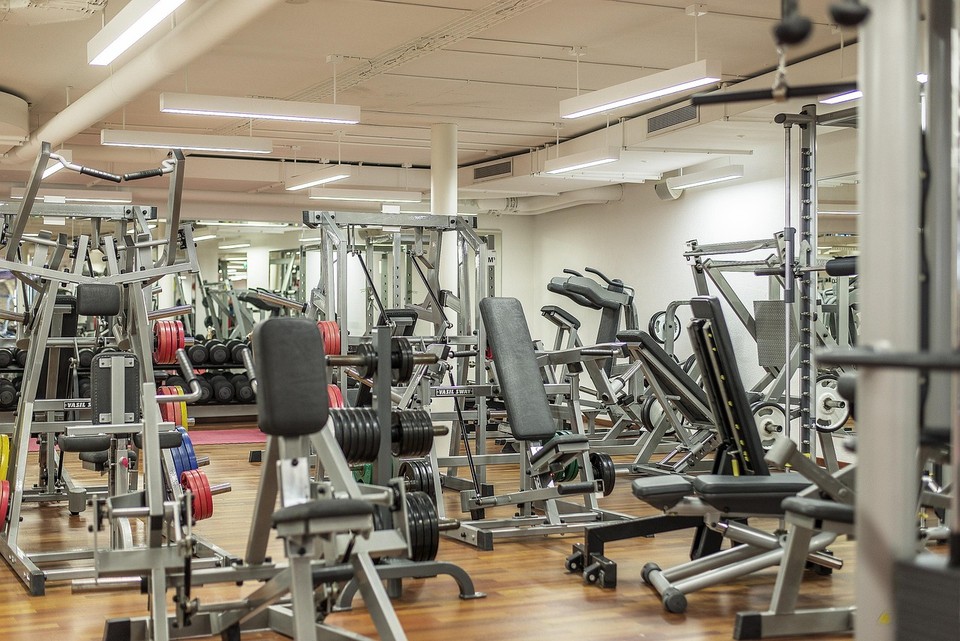
输入图像
输入已核验 · 同一 benchmark case · gap 0.8875
image_static_photorealistic_public_spaces_0154套件: image_static 场景: photorealistic / indoor / public_spaces
基准 prompt target
Camera move right. A gym interior with cardio machines, water cooler, and exercise mats.
prompt source: prompt_target
两条视频的首帧都已通过与展示输入的几何匹配核验;高低标签只比较当前 metric。
较高指标分 分数 0.9021 平均重投影误差 0.105 px
较低指标分 分数 0.0146 平均重投影误差 1.056 px
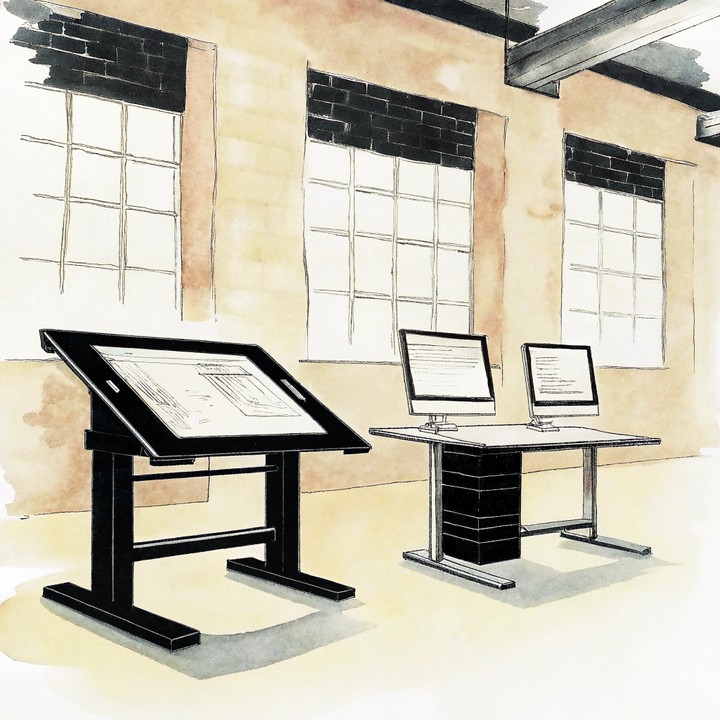
输入图像
输入已核验 · 同一 benchmark case · gap 0.9211
image_static_stylized_workspaces_0105套件: image_static 场景: stylized / indoor / workspaces
基准 prompt target
Camera pull out. A modern workspace with desk, office chair, and large windows. Camera pan right. A modern workspace with wall shelves, potted plant, and large windows. Camera move right. A modern workspace with meeting table, whiteboard, and large windows.
prompt source: prompt_target
两条视频的首帧都已通过与展示输入的几何匹配核验;高低标签只比较当前 metric。
较高指标分 分数 0.9308 平均重投影误差 0.074 px
较低指标分 分数 0.0096 平均重投影误差 1.062 px
DROID-SLAM: Deep Visual SLAM for Monocular, Stereo, and RGB-D Cameras
Zachary Teed and Jia Deng.
Structure-from-Motion Revisited
Johannes L. Schönberger and Jan-Michael Frahm.
Pixelwise View Selection for Unstructured Multi-View Stereo
Johannes L. Schönberger, Enliang Zheng, Jan-Michael Frahm, and Marc Pollefeys.
BibTeX title = { Droid-slam: Deep visual slam for monocular, stereo, and rgb-d cameras } ,
author = { Teed, Zachary and Deng, Jia } ,
journal = { Advances in neural information processing systems } ,