long_sequence_dynamic_degree is an optical-flow probe for whether enough motion still occurs over a long rollout. The long_sequence backend splits the video into clips. RAFT-things estimates flow between frames sampled at about 8 Hz. Each transition uses the mean magnitude of the top 5% flow pixels. A clip is dynamic (1.0) if enough transitions exceed a resolution-scaled threshold; otherwise it is 0.0.
m k = mean ( t o p 5 % ∥ f k ∥ ) (1) m_k = \operatorname{mean}\bigl(\mathrm{top}_{5\%}\,\|\mathbf{f}_k\|\bigr)
\tag{1} m k = mean ( top 5% ∥ f k ∥ ) ( 1 ) τ = 6 ⋅ min ( H , W ) 256 , n τ = max ( 1 , r o u n d ( 4 ⋅ N / 16 ) ) (2) \tau = 6\cdot\frac{\min(H,W)}{256},\qquad
n_{\tau} = \max\!\bigl(1,\,\mathrm{round}(4\cdot N/16)\bigr)
\tag{2} τ = 6 ⋅ 256 min ( H , W ) , n τ = max ( 1 , round ( 4 ⋅ N /16 ) ) ( 2 ) s d y n = 1 [ ∣ { k : m k > τ } ∣ ≥ n τ ] (3) s_{\mathrm{dyn}} = \mathbf{1}\!\left[\,|\{k:m_k>\tau\}| \ge n_{\tau}\,\right]
\tag{3} s dyn = 1 [ ∣ { k : m k > τ } ∣ ≥ n τ ] ( 3 ) N N N { 0 , 1 } \{0,1\} { 0 , 1 } memory_loop this is an official metric. Shared runtime: Long-Sequence Metrics .
Audit manifest: docs/assets/metric_examples/longseq_memory_60s_examples_20260909.json.
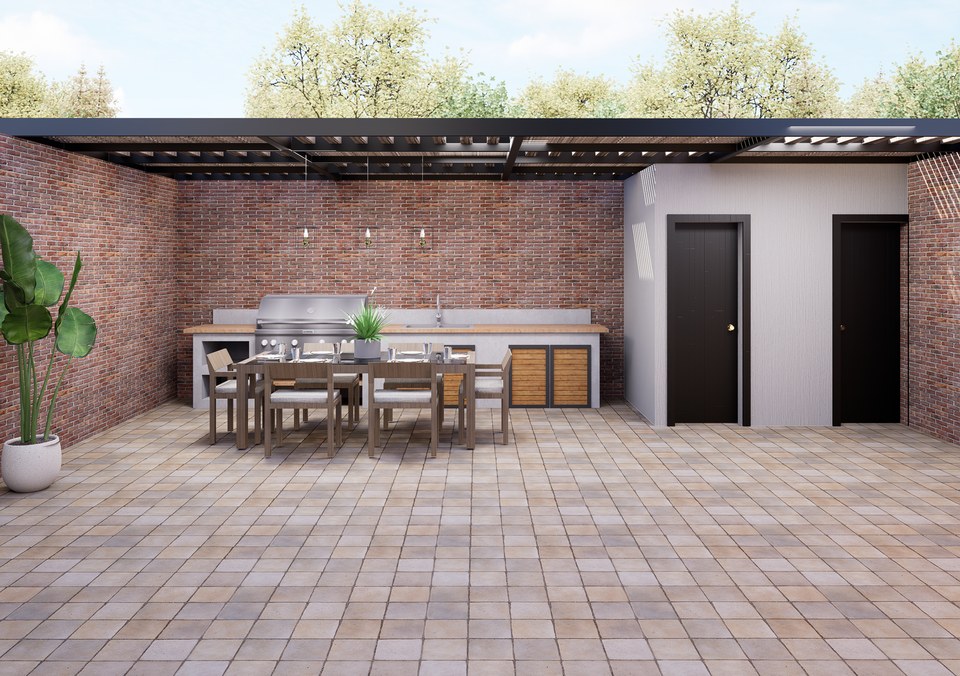
Input image
60s memory_loop · same benchmark case · gap 1.0000
memory-yaw_loop_360-memory_pool_479Suite: memory_loop Scene: photorealistic / indoor / dining_spaces
Benchmark prompt target
Rotate the camera a full turn in place and come back to the starting view.
prompt source: memory_loop_prompt
The higher example keeps enough camera or scene motion over the minute; the lower one is nearly static.
Higher metric score Score 1.0000 · official
Lower metric score Score 0.0000 · official
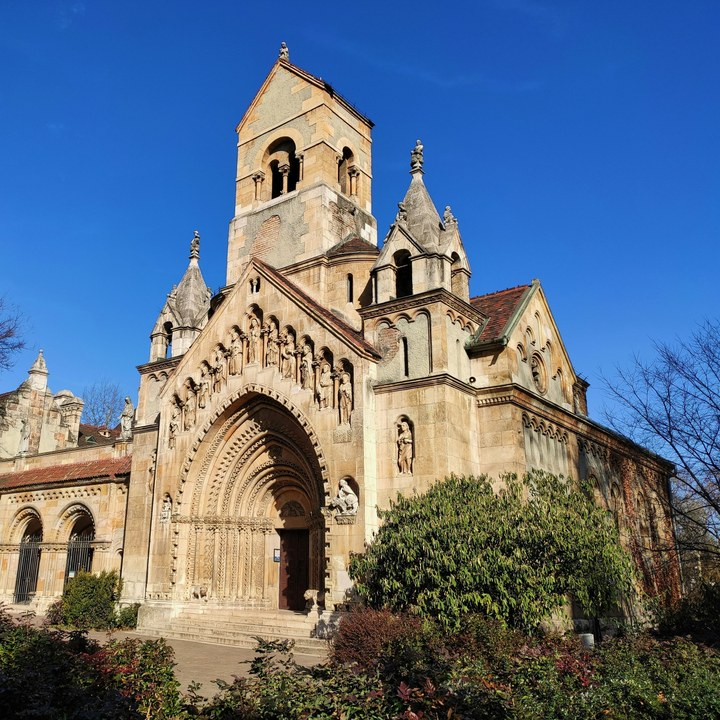
Input image
60s memory_loop · same benchmark case · gap 1.0000
memory-dolly_loop-memory_pool_002Suite: memory_loop Scene: photorealistic / outdoor / city
Benchmark prompt target
Move the camera forward through the scene, then back to where it started.
prompt source: memory_loop_prompt
The higher example keeps enough camera or scene motion over the minute; the lower one is nearly static.
Higher metric score Score 1.0000 · official
Lower metric score Score 0.0000 · official
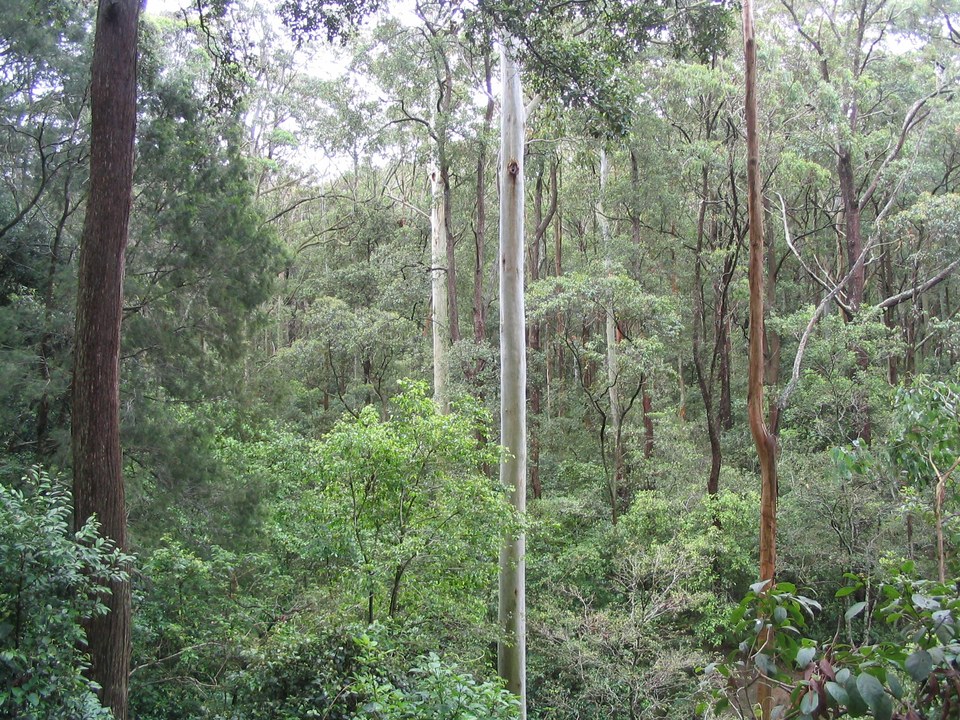
Input image
60s memory_loop · same benchmark case · gap 1.0000
memory-yaw_loop_180-memory_pool_427Suite: memory_loop Scene: stylized / indoor / workspaces
Benchmark prompt target
Turn the camera to the right, then turn back to the starting view.
prompt source: memory_loop_prompt
The higher example keeps enough camera or scene motion over the minute; the lower one is nearly static.
Higher metric score Score 1.0000 · official
Lower metric score Score 0.0000 · official
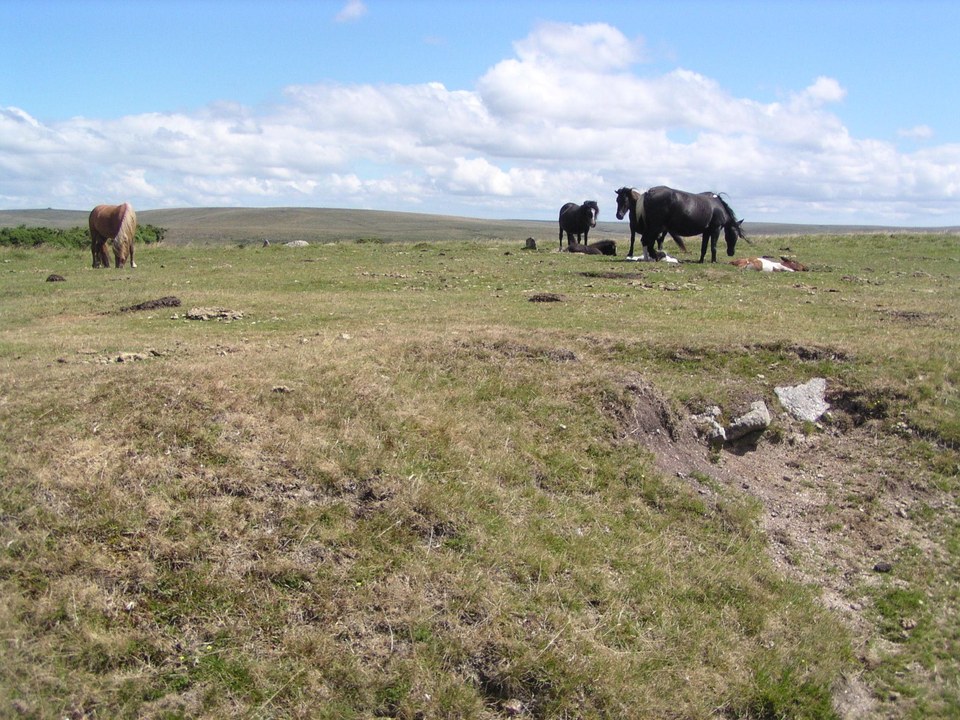
Input image
60s memory_loop · same benchmark case · gap 1.0000
memory-palindrome_loop-memory_pool_281Suite: memory_loop Scene: photorealistic / outdoor / verdant_landscape
Benchmark prompt target
Move forward, turn and continue, then retrace the whole path back.
prompt source: memory_loop_prompt
The higher example keeps enough camera or scene motion over the minute; the lower one is nearly static.
Higher metric score Score 1.0000 · official
Lower metric score Score 0.0000 · official
Input image
60s memory_loop · same benchmark case · gap 1.0000
memory-yaw_loop_360-memory_pool_477Suite: memory_loop Scene: photorealistic / outdoor / aquatic_landscape
Benchmark prompt target
Rotate the camera a full turn in place and come back to the starting view.
prompt source: memory_loop_prompt
The higher example keeps enough camera or scene motion over the minute; the lower one is nearly static.
Higher metric score Score 1.0000 · official
Lower metric score Score 0.0000 · official